
-
The Student Ownership of Behavior
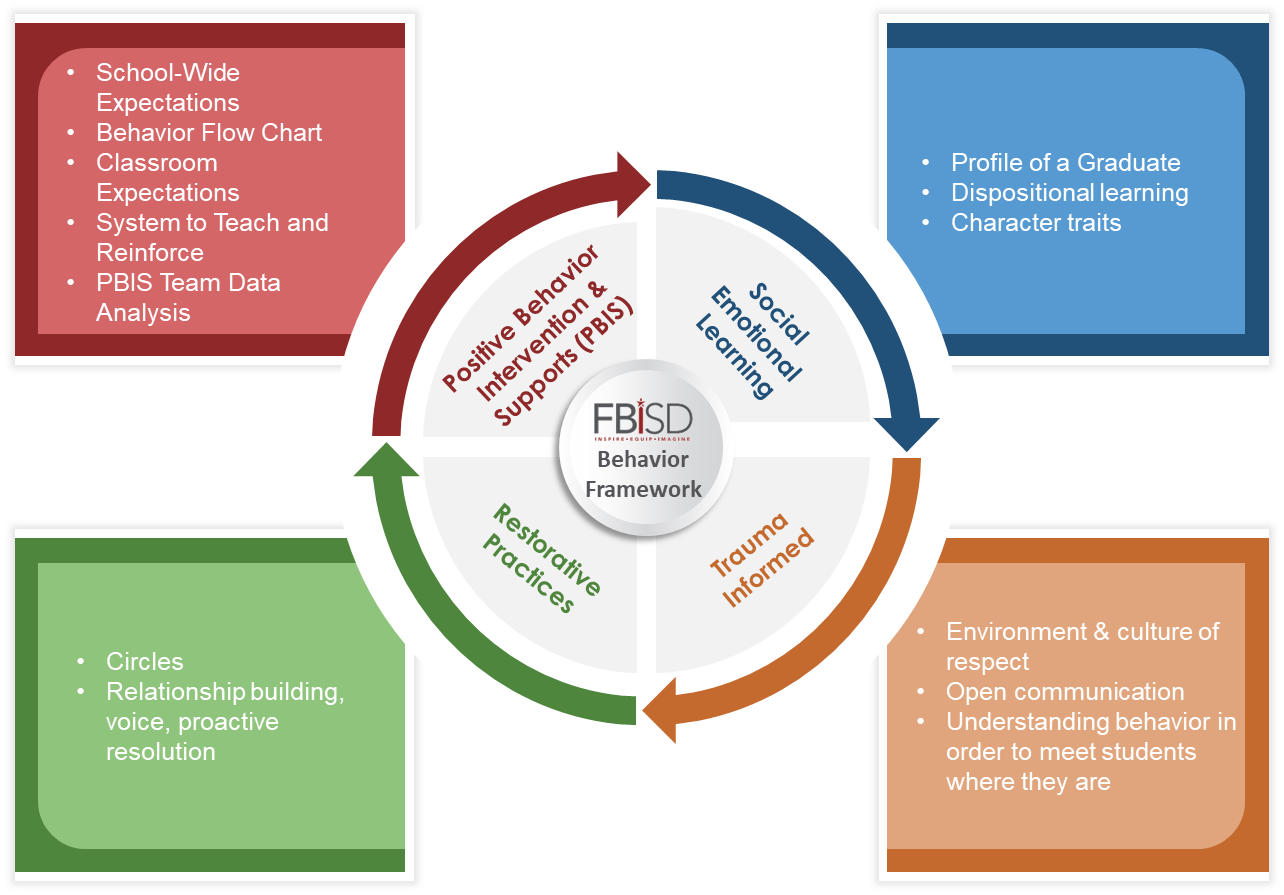
Positive Behavior Interventions and Supports (PBIS)
Positive Behavior Intervention & Supports (PBIS) is an evidenced-based framework for promoting safety and positive behavior. PBIS provides ideas to support teaching, modeling, recognizing appropriate behavior, and also identifies systems for logically responding to classroom and individual student problems that can also be used in the home setting. PBIS increases the capacity to reduce problem behaviors. The focus of PBIS is prevention, not punishment. If a student struggles behaviorally, PBIS looks at behavior as a form of communication. Instead of punishment, PBIS focuses on what is motivating the behavior, teaching appropriate expectations, and using logical consequences.
Restorative Practices
Restorative Practices are grounded in a philosophy that fosters belonging over exclusion, social engagement over control, and meaningful accountability over punishment. Humans are hardwired to connect. The philosophy behind restorative practices considers the importance of creating a sense of community where students feel they belong, and their voices are heard. We shift from punishment to student ownership of behavior to empower students to learn from their behavior and understand the impact their behavior has on the school/classroom community.
Trauma-Informed Practices
Trauma Informed Care is a strength-based framework that is grounded in an understanding of and responsiveness to the impact of trauma. It emphasizes the physical, psychological, and emotional safety of students, thereby creating opportunities to rebuild a sense of control and empowerment. When we label these behaviors as “good” or “bad,” we forget that children’s behavior is reflective of their experience.
Social Emotional Learning
Social and emotional learning (SEL) is the process through which children and adults acquire and effectively apply the knowledge, attitudes, and skills necessary to understand and manage emotions, set and achieve goals, feel and show empathy for others, establish and maintain positive relationships, and make responsible decisions.
Social and Emotional Learning is the foundation of all relationships and the plate in which we should serve all instruction. No significant learning happens without a significant relationship. We must understand SEL is helpful to both children and adults, increasing self-awareness, academic achievement, and positive behaviors both in and out of the classroom. Students who are equipped to deal with problems that affect them on a personal level are then better able to navigate the pressures of adult life. SEL and well-being in the classroom and at home are critical to our students' success.
Select a School...
Select a School
- Fort Bend Education Foundation
- Austin High School
- Bush High School
- Clements High School
- Dulles High School
- Hightower High School
- Kempner High School
- Elkins High School
- Marshall High School
- Ridge Point High School
- Travis High School
- Willowridge High School
- Progressive High School
- James Reese Career and Technical Center
- Baines Middle School
- David Crockett Middle School
- Dulles Middle School
- Hodges Bend Middle School
- James Bowie Middle School
- Lake Olympia Middle School
- First Colony Middle School
- Fort Settlement Middle School
- Garcia Middle School
- McAuliffe Middle School
- Missouri City Middle School
- Quail Valley Middle School
- Sartartia Middle School
- Sugar Land Middle School
- Ronald Thornton Middle School
- M.R. Wood Center for Learning
- Ridgemont Early Literacy Center
- Hunters Glen Early Literacy Center
- Allen Aldridge Jr. Elementary
- Anne McCormick Sullivan Elementary
- Arizona Fleming Elementary
- Austin Parkway Elementary
- Barbara Jordan Elementary
- Barrington Place Elementary
- Brazos Bend Elementary
- Carolyn and Vernon Madden Elementary
- Colony Bend Elementary
- Colony Meadows Elementary
- Commonwealth Elementary
- Cornerstone Elementary
- Donald Leonetti Elementary
- Dulles Elementary
- Dr. Lynn Armstrong Elementary
- E. A. Jones Elementary
- Edgar Glover Jr Elementary
- Heritage Rose Elementary
- Highlands Elementary
- Hunters Glen Elementary
- James C. Neill Elementary
- James Patterson Elementary
- Jan Schiff Elementary
- Juan Seguin Elementary
- Lakeview Elementary
- Lantern Lane Elementary
- Lexington Creek Elementary
- Lula Belle Goodman Elementary
- Malala Yousafzai Elementary
- Mary Austin Holley Elementary
- Meadows Elementary
- Mission Elementary
- Mission West Elementary
- Oakland Elementary
- Oyster Creek Elementary
- Palmer Elementary
- Rosa Parks Elementary
- Pecan Grove Elementary
- Quail Valley Elementary
- Ridgegate Elementary
- Ridgemont Elementary
- Rita Drabek Elementary
- Scanlan Oaks Elementary
- Settlers Way Elementary
- Sienna Crossing Elementary
- Sugar Mill Elementary
- Townewest Elementary
- Walker Station Elementary
- Walter Moses Burton Elementary
- Almeta Crawford High School
- Alyssa Ferguson Elementary
- Sonal Bhuchar Elementary
- Ferndell Henry Elementary
- Briargate Elementary
- Amy Coleman Middle School
